

What Temperature Should Air Conditioning Be Set at in Winter?

Getting the temperature right in a commercial building during winter is a more deliberate exercise than most people realise. Offices, warehouses, retail floors, and hospitality venues all have different occupant densities, ceiling heights, insulation qualities, and usage patterns. What works for a small open-plan office won’t automatically translate to a large warehouse or a hospitality kitchen.
The question of what temperature should air conditioning be set at in winter has no single answer for every building, but there is a well-supported starting point.
Key Takeaways
- For commercial buildings in Australia, the recommended air conditioning temperature for winter is between 18°C and 20°C in heating mode.
- Every degree above 20°C can add up to 10% to heating energy costs, according to the Australian Government’s energy efficiency guidance.
- Insulation, zoning, and operating schedules all affect how well a system maintains its target temperature.
- Adjusting the thermostat won’t fix a mechanical fault. Persistent performance issues need professional attention.
- Pre-winter servicing is one of the most cost-effective steps a facility manager can take to maintain reliable heating.
- If your system is struggling to reach or hold temperature, that’s a sign it needs a service, not a higher setting.
The Recommended Range for Commercial Buildings
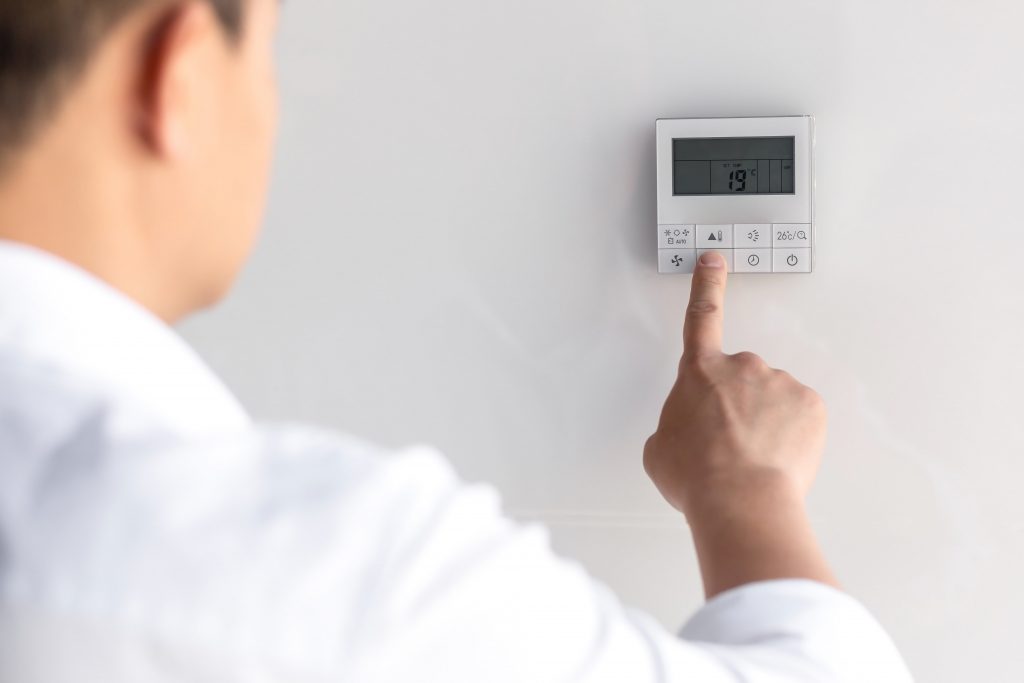
When facility managers ask what temperature should air conditioning be set at in winter, the Australian Government’s energy guidance provides the clearest benchmark: keep heating set between 18°C and 20°C.
For most commercial premises, 19°C tends to work well as a baseline. Buildings with higher occupant density, like open-plan offices or hospitality venues, generate more body heat and can often sit comfortably at the lower end of the range. Warehouses and large open spaces may require slightly more consistent monitoring, as heat loss through roller doors, loading bays, or high ceilings can affect how well the system maintains that temperature.
The key figure to keep in mind: each degree above 20°C can increase heating energy use by up to 10%. In a commercial setting where air conditioning systems run for eight to ten hours a day, that adds up quickly across a billing cycle.
Why the Temperature You Set Matters More Than You Think
The thermostat setting is rarely just about comfort in the commercial sector. It affects energy costs, how hard the system works, and the conditions the people inside the building are actually trying to work in.
Energy Costs
Running above the recommended range in heating mode is the fastest way to inflate energy bills during winter. Commercial systems move significant volumes of air and consume considerable energy to do it. Pushing a system to maintain 23°C or 24°C in heating mode when 19°C would serve the same occupants is an unnecessary expense.
System Performance and Lifespan
Commercial air conditioning systems are sized to operate efficiently within a design range. Running consistently above that range forces the system to work harder than intended. Over time, this places additional strain on compressors and other components, increasing the likelihood of faults and reducing the equipment’s expected service life.
Occupant Productivity
There is a practical ceiling to what’s comfortable in a working environment. Overly warm spaces cause fatigue and reduce concentration, and that has a direct impact on output. Safe Work Australia’s Code of Practice for managing the work environment is clear that air temperatures too high or too low contribute to fatigue in commercial settings. Keeping heating within the 18–20°C range supports comfort without pushing into the territory where staff start to flag.
Factors That Affect the Right Setting in Commercial Environments
Setting the thermostat to 19°C doesn’t guarantee the building will maintain that temperature consistently. Several operational factors influence how effectively a commercial system holds its setpoint.
Building Envelope and Insulation
Heat loss is one of the most common reasons a commercial system runs harder than it should. Buildings with older window seals, poorly insulated walls, or gaps around loading dock doors lose heat faster than the system can replace it, so the system runs harder and longer without actually improving comfort. Before adjusting the thermostat upward, it’s worth identifying where heat is escaping. Sealing those points is frequently the more cost-effective fix.
Zoning Configuration
Not every part of a commercial building needs to be heated to the same temperature at the same time. Running a consistent setting across an unoccupied boardroom and a busy open-plan floor simultaneously is one of the most common sources of wasted heating energy. Zoning controls, in a split system, allow heat to go where people actually are.
Meeting rooms, storage areas, and server rooms typically don’t need the same heating target as main working areas, and adjusting for that alone can make a measurable difference to operating costs.
Operating Hours and Scheduling
Most commercial systems don’t need to run continuously to keep a building comfortable. Programmable scheduling, or integration with a building management system, allows heating to ramp up before staff arrive and reduce once they leave. Evenings, weekends, and unoccupied periods are where avoidable runtime adds up fastest.
Filter and Airflow Condition
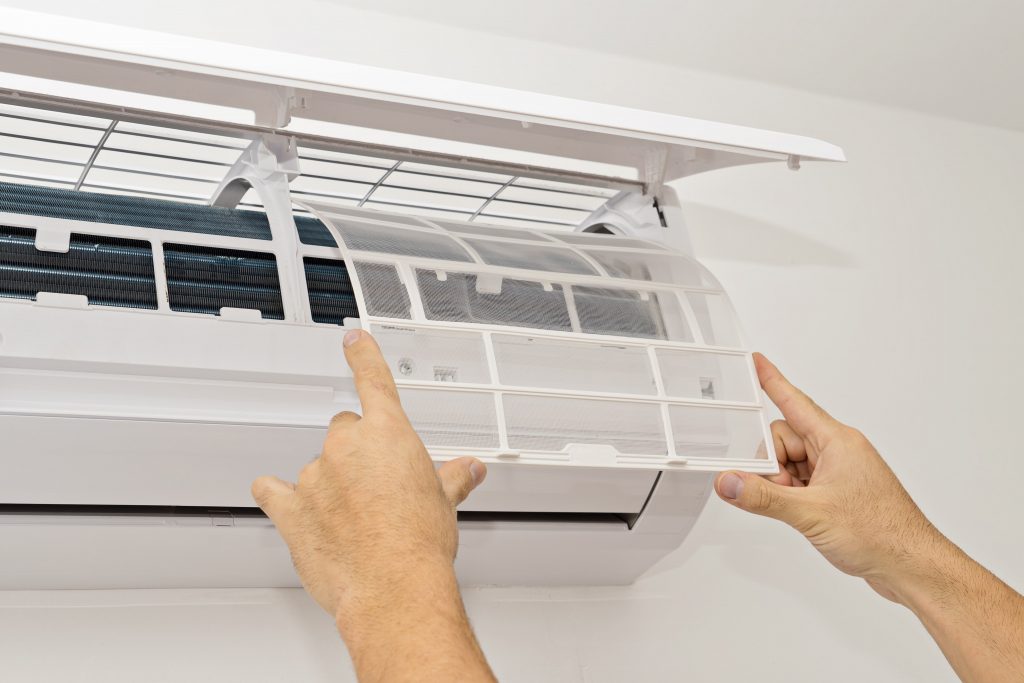
A system can be set correctly and still underperform. Dirty filters and restricted airflow prevent heat from distributing evenly across a space, so the system keeps running, trying to hit a setpoint it can’t consistently reach. Regular filter cleaning is one of the simplest maintenance tasks, and one of the most frequently overlooked ahead of winter.
How to Reduce Energy Costs Without Sacrificing Comfort
Finding the best temperature for air conditioning in winter in Australia is only part of the equation. Several steps help reduce heating costs in commercial buildings without requiring significant capital expenditure.
Set a Consistent Temperature and Leave It
Frequent adjustments up and down force the system to cycle more intensively. Each time the system restarts from a lower temperature, it draws more energy getting back to the target than it would have used simply holding it. A stable setting costs less to maintain than a variable one.
Use Timer Functions and Scheduling
Most commercial systems support programmable on/off scheduling. Heating a building 30 minutes before staff arrive and reducing output 30 minutes before they leave is a practical way to reduce runtime without affecting comfort. Across a five-day working week, that can amount to several hours of unnecessary operation removed without anyone inside the building noticing a difference.
Zone by Occupancy, Not by Building
Map your occupied hours against your zone settings and look for mismatches. A server room running at the same heating target as the main office floor, or a warehouse zone heating two hours before the first shift, are both common sources of costs that don’t improve anyone’s comfort.
Schedule a Pre-Winter Service
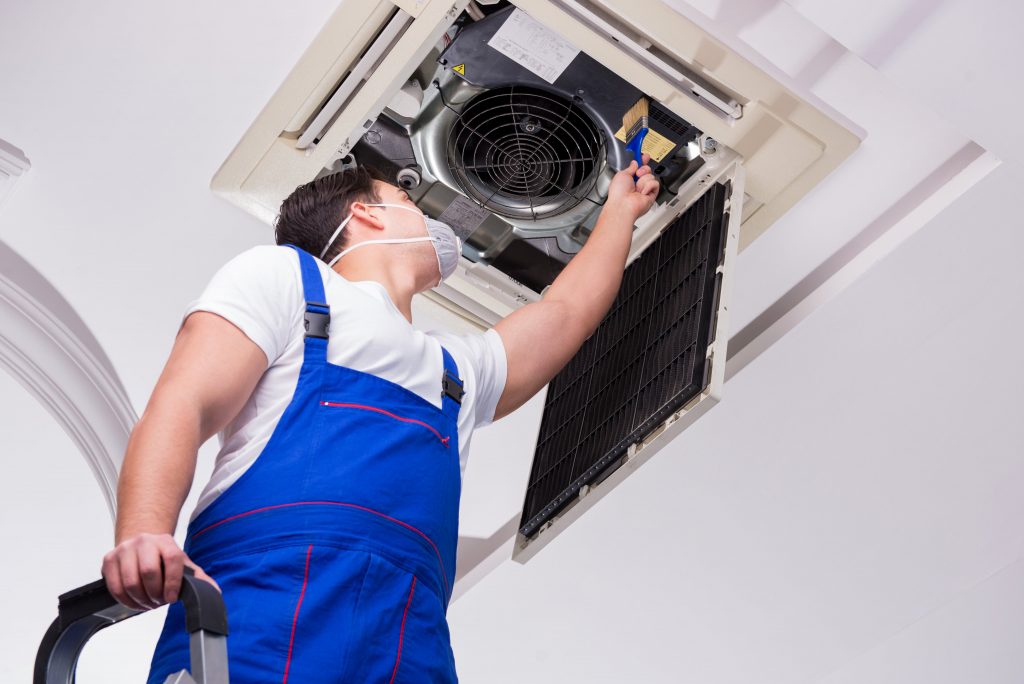
A system entering winter with dirty coils, low refrigerant, or worn components will work harder and less efficiently to maintain any temperature setting. Faults that are minor in summer tend to become more disruptive under sustained heating demand, and emergency repairs in the middle of winter cost more and take longer to resolve than a planned service before the season begins.
When Your System Needs a Service, Not Just a Setting Change
There is a point at which adjusting what temperature air conditioning is set at in winter won’t resolve a performance issue. If a commercial system is struggling to reach its setpoint, cycling on and off frequently, or producing uneven temperatures across zones, the problem is generally mechanical rather than operational. Signs that professional attention is warranted include:
Longer Recovery Times
The system takes significantly longer than usual to bring the building up to temperature after an off period or after a cold morning start. This often indicates reduced refrigerant charge, restricted airflow, or compressor performance issues.
Uneven Heating Across Zones
Some areas reach a comfortable temperature while others remain cold, even with dampers open and supply outlets clear. This can indicate duct leakage, balancing issues, or problems with zone controls.
Increased Energy Consumption Without Change in Usage
If energy bills are rising but nothing about the building’s operation has changed, the system is working harder than it should. This is a reliable early indicator of declining mechanical performance.
Frost or Ice Formation on External Components
Some frost on outdoor units during a cold start is normal and part of the defrost cycle. Persistent icing, particularly during operating hours, points to a refrigerant or airflow issue that requires diagnosis.
Attempting to compensate for these issues by raising the thermostat setting doesn’t address the underlying fault. It increases costs while leaving the problem in place.
Keep Your Commercial Building Comfortable This Winter
Knowing what temperature air conditioning should be set at in winter is the straightforward part. Making sure your system can actually deliver and maintain it consistently across a full building, through the day and across the season, is where a professional assessment makes the difference.
If your system is struggling to hold its target temperature, running longer than it should, or producing uneven results across zones, a service is the right starting point.
At Perth Air & Power Solutions, we carry out commercial air conditioning servicing and repairs across Perth. Our team can assess system performance, identify faults, and get your HVAC operating as it should before winter demand peaks.
Contact us today to book a service or discuss a planned maintenance programme for your facility.
Frequently Asked Questions
What is the best temperature for air conditioning in winter in Australia?
The Australian Government’s energy guidance recommends keeping heating set between 18°C and 20°C in commercial and residential buildings during winter. For most office environments, 19°C works well as a stable baseline. Buildings with higher occupant density can often sit at the lower end of that range without affecting comfort.
Does raising the temperature setting by one degree really increase costs?
Yes. The Australian Government’s energy efficiency advice states that each additional degree of heating can add up to 10% to energy costs. In a commercial building running HVAC for eight or more hours a day, the cumulative cost across a quarter is measurable. Keeping to the 18–20°C range is one of the most straightforward ways to control energy expenditure during winter.
How often should a commercial air conditioning system be serviced before winter?
Most commercial systems benefit from a professional service at least once a year, with a pre-winter check being the most valuable timing. A service typically covers filter cleaning, coil inspection, refrigerant levels, and electrical components: the things that degrade quietly over summer and affect heating performance once demand increases. Catching issues before winter begins is significantly less disruptive and less costly than managing a fault mid-season.
Can I use zoning to reduce heating costs in winter?
Yes. Zoning is one of the most effective tools for reducing energy costs in commercial buildings. Heating only the areas that are occupied, and matching the schedule to actual usage patterns, allows the system to maintain the recommended temperature range in the spaces that matter without running unnecessarily across the full building.
What does it mean if my system is running but not reaching the set temperature?
This is typically a sign that the system requires professional attention rather than a thermostat adjustment. Common causes include dirty or blocked filters, low refrigerant charge, airflow restrictions, or declining compressor performance. Raising the setpoint in this situation increases energy consumption without resolving the underlying fault.
Note: This post was originally published on May 09, 2021 and has been updated on July 03, 2023.
Author Bio

Jason Hobson
MORE ARTICLES
FOR YOUR BRAIN

What Temperature Should Air Conditioning Be Set at in Winter?
Posted on Friday, July 03rd, 2026Getting the temperature right in a commercial building during winter is a more deliberate exercise than most people realise. Offices, warehouses, retail floors, and hospitality venues all have different occupant densities, ceiling heights, insulation qualities, and usage patterns. What works for a small open-plan office won't automatically translate to a large warehouse or a hospitality kitchen....
Read more
What Temperature Should a Commercial Freezer Be?
Posted on Tuesday, May 05th, 2026Freezer issues rarely begin with a complete failure. More often, performance starts to shift gradually. Temperatures fluctuate slightly, stock becomes less consistent, and energy use increases as the system works harder to maintain conditions....
Read more
How Often Should Air Conditioning Units Be Serviced?
Posted on Tuesday, March 24th, 2026Air conditioning systems in commercial buildings often run for extended hours to maintain stable indoor temperatures. Offices, warehouses, retail spaces, and hospitality venues all rely on reliable climate control to support staff comfort, equipment performance, and daily operations....
Read more
What is Process Cooling?
Posted on Thursday, February 12th, 2026Unwanted heat in commercial environments is rarely a one-off issue. It builds gradually, through constant equipment use, high-output processes, and enclosed operating environments, until it starts to affect performance. Machines begin running hotter than expected. Product quality becomes harder to control. Energy costs rise without a clear cause....
Read more
Why is My Aircon Leaking Water?
Posted on Monday, January 12th, 2026Water leaking from a commercial air conditioning system is often first noticed as a minor inconvenience. A small puddle beneath an indoor unit. Drips appearing through ceiling tiles. Damp patches forming where they shouldn’t....
Read more
How to Build a Reliable Electrical Maintenance Plan
Posted on Tuesday, December 23rd, 2025Electrical systems are one of the most relied-on parts of any commercial building, but they’re also one of the easiest to overlook. Without a clear proactive maintenance plan, issues that start small can lead to system failures, safety risks, and costly downtime. This is where a qualified, dual-certified provider becomes essential....
Read more
How Does Thermal Imaging Work?
Posted on Wednesday, December 17th, 2025When you manage a commercial facility, staying ahead of equipment issues, energy inefficiencies, and safety risks is a constant challenge. A single electrical or HVAC fault can lead to downtime, compliance issues, or rising operational costs....
Read more
What’s the Best Temp for Air Conditioner Settings in Your Office?
Posted on Monday, December 08th, 2025Choosing the best temperature for your office air conditioner isn’t just about comfort. It directly impacts energy consumption, staff productivity, and the ongoing performance of your system. Too warm, and staff productivity drops. Too cold, and operational costs rise unnecessarily. In Perth’s climate, balancing comfort and cost is critical for every business. This guide explains the recommended air conditioner temperature settings for commercial offices, why they matter, and how to avoid common cooling mistakes....
Read more
Why is My Commercial Refrigerator Freezing Everything?
Posted on Friday, December 05th, 2025Noticed frozen lettuce, iced-over dairy or stiff drinks coming out of your commercial fridge? If you’ve been asking yourself, ‘Why is my commercial refrigerator freezing?’, you’re not alone. This is a common issue for businesses in foodservice, retail and logistics, and it can quickly turn into a costly problem....
Read more
Split System vs Ducted Air Conditioning: What’s Best for Your Business
Posted on Monday, November 10th, 2025Choosing the right air conditioning system for your commercial premises is more than a matter of comfort. It has a direct impact on energy efficiency, operating costs, staff productivity and the overall performance of your business. A poorly matched system can lead to rising bills, ongoing maintenance issues and an inconsistent indoor climate. The right solution, however, supports your business goals with reliable, long-term performance....
Read more